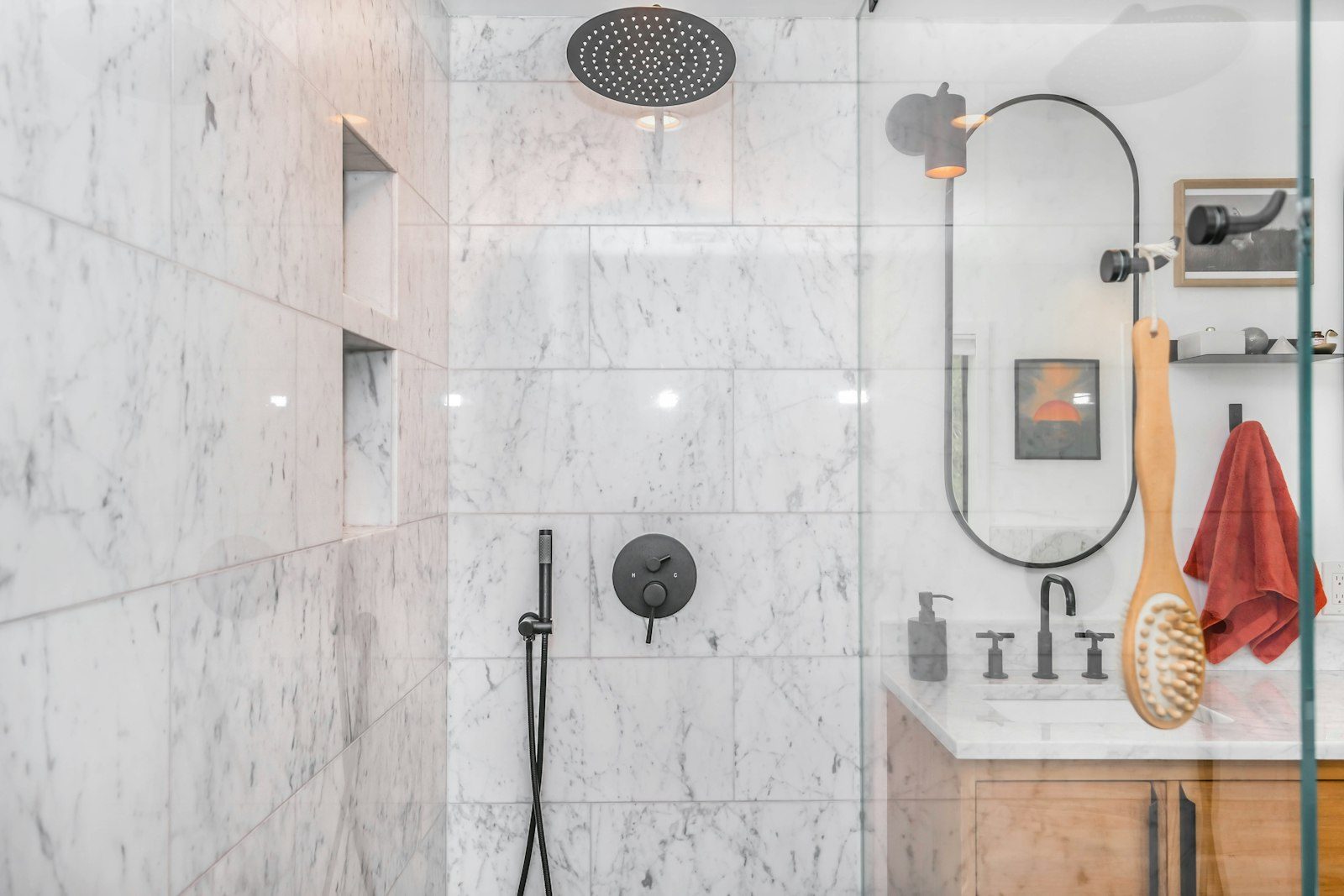
Fresh silicone, a cleaner bathroom and fewer leaks
Silicone is the flexible sealant that fills the joints where tiled surfaces meet: internal corners, the junction between walls and floors, around baths and shower bases, along vanity tops and where shower screens meet tiles. It is a small detail that does a big job. It lets the building move without cracking, and it stops water from getting into the joints most at risk.
Silicone does not last forever. Over time it discolours, grows mould, shrinks, peels away from tiles or cracks. When that happens, water can get behind it every time you shower. Left alone, that water can damage grout, loosen tiles and eventually reach the timber and plasterboard behind the wall or under the floor.
Resealing replaces old, failed silicone with new sealant, restoring both the look of the bathroom and its protection against water. We provide resealing as a standalone service across Warragul and surrounding towns, carried out by licensed and insured trades.
Signs your silicone needs replacing
- Black or pink mould spots in the silicone that will not clean off.
- Silicone that has yellowed or discoloured.
- Gaps between the silicone and the tile, bath or shower base.
- Cracked, split or peeling silicone.
- Water appearing outside the shower after use.
- Grout cracking along corners or junctions where silicone should be.
- Musty smells around the shower.
Why mould grows in silicone
Bathrooms in Warragul spend much of the year cool and damp, and mould thrives in those conditions. Silicone in showers is constantly wet, and soap residue gives mould something to feed on. Once mould grows into the silicone itself rather than sitting on the surface, cleaning can lighten it but cannot remove it. The only lasting fix is to cut out the old silicone, treat the joint and apply new sealant. Improving ventilation also helps reduce regrowth.
Our resealing process
1. Assessment
We look at the condition of the silicone, grout and tiles and check for signs that water has already got behind the surface, such as loose or drummy tiles. If the problem is more than failed silicone, we explain what we find.
2. Removal
Old silicone is cut and scraped out completely. Applying new silicone over old is a common shortcut that does not last, because the new sealant does not bond properly and mould continues beneath.
3. Cleaning and treatment
The joint is cleaned of residue, soap scum and mould, treated where needed and allowed to dry thoroughly. New silicone will not bond to a damp or dirty joint.
4. Application
We apply a sanitary-grade silicone suited to wet areas, with mould inhibitors, in a colour matched to your grout or fixtures. The bead is tooled smoothly so it is neat and sheds water.
5. Curing
Fresh silicone needs time to cure before it gets wet. We let you know how long to wait before using the shower, usually twenty-four hours.
What a reseal visit looks like
We arrive at the agreed time, protect the floor around the shower and inspect every joint before starting. Old sealant is removed by hand with blades and specialist tools that will not scratch tiles or glass. Joints are cleaned, treated and dried, using a heat gun or fan where needed in cold weather, because new silicone must go onto a completely dry surface. Each bead is applied and tooled in one continuous pass for a clean line. Before leaving, we tidy up, remove all waste, show you the finished work and explain how long to wait before showering. If we noticed anything of concern during the inspection, such as a loose tile, cracked grout or a weeping tap, we point it out and explain your options. There is no pressure to proceed with anything further.
Where silicone belongs
Grout and silicone each have their place. Grout fills joints between tiles on flat surfaces. Silicone belongs at movement joints, including:
- Internal corners where two walls meet.
- Where walls meet the floor.
- Around the edges of baths, shower bases and basins.
- Along the back of vanity tops and splashbacks.
- Where shower screen channels meet tiles.
- Around tapware, outlets and penetrations where appropriate.
- Where tiles meet another material, such as a window frame or timber.
A common problem in older bathrooms is grout in these corners instead of silicone. Grout is rigid and cracks as the building moves, letting water in. Part of resealing may involve removing grout from movement joints and replacing it with silicone.
When resealing is not enough
Resealing solves many problems, but not all. If water has already got behind the tiles for a long time, you may see loose tiles, a soft floor, swelling or mould on adjacent walls. In these situations the membrane beneath may have failed, or there may never have been one. Resealing will improve the surface but will not repair the underlying damage. We tell you honestly if we think a more substantial repair or a renovation is needed, and explain why.
Resealing as maintenance
Silicone is a maintenance item. Even good-quality sealant in a well-ventilated bathroom will eventually need replacing. Checking it every year and replacing it before it fails is a simple way to protect your bathroom. Resealing is also worthwhile before selling a home, because fresh silicone makes a bathroom look cleaner and better cared for.
Choosing the right sealant
Not all silicone is the same, and the wrong product fails quickly. Hardware-store general-purpose sealants are not designed for constant water exposure and often lack the mould inhibitors a shower needs. Some acetic-cure silicones can react with natural stone, metal finishes or certain mirror backings. For bathrooms we use neutral or sanitary-grade silicones formulated for wet areas, compatible with the tiles, stone and fixtures in the room. Where the joint is wide or deep, a backing rod is inserted first so the silicone bonds only to the two sides of the joint and can stretch properly as the building moves. This detail is often skipped, and it is one reason some reseals crack within months.
Ventilation: the key to lasting results
New silicone will stay clean far longer in a bathroom that dries out quickly after use. In many older Warragul homes the exhaust fan is undersized, noisy, vents only into the roof space or is missing altogether. If mould returns quickly after cleaning, ventilation is usually the cause. We check the fan as part of a reseal and can recommend a quieter, more effective unit ducted to the outside. Opening a window after showering, leaving the shower door ajar and running the fan for twenty minutes or so afterwards all help keep the room dry.
Baths, vanities and kitchens too
Resealing is not only for showers. The joint where a bath meets the tiled wall flexes every time the bath is filled, so it often fails first. Vanity tops and splashbacks collect water at the back edge. Laundry troughs and benchtops see constant splashing. We can reseal every wet joint in the house in a single visit, so everything looks fresh and protected at the same time.
Rental properties and property managers
Landlords and property managers often need resealing done between tenancies or to address mould complaints. We can work with property managers to arrange access, complete the work efficiently and report on the condition of the shower, including any signs of deeper problems that may need attention.
Combining resealing with grout care
Silicone and grout often deteriorate together. Our tile and grout cleaning service can be combined with resealing for a thorough refresh, including deep cleaning of tiles and grout, regrouting where needed, sealing grout and replacing all silicone. The difference this makes to an older bathroom can be remarkable.
Shower screens and silicone
Shower screens rely on silicone where their channels or brackets meet tiles. If this seal fails, water escapes onto the bathroom floor. When resealing a shower, we check the screen seals too and replace them where needed. If the screen itself is damaged or leaking at its seals, our shower screen service covers repairs and replacements.
Caring for new silicone
- Run the exhaust fan during and after every shower.
- Squeegee or wipe down the shower after use to remove water and soap.
- Clean with mild, pH-neutral products rather than bleach or abrasive cleaners, which can damage silicone.
- Avoid picking at the edges.
- Check it annually.
Common questions
How long does resealing take?
Most showers can be resealed in a few hours, followed by a curing period before use.
Can I use the shower the same day?
Usually we recommend waiting twenty-four hours, depending on the product and conditions.
Will new silicone stop my shower leaking?
If the leak is caused by failed silicone, yes. If the membrane beneath has failed, resealing will not solve the problem. We assess this before starting.
Can you match my grout colour?
Silicone comes in many colours, and we match it as closely as possible to your grout, tiles or fixtures.
Book a design consultation
If your silicone is mouldy, cracked or peeling, book a consultation. We will assess the shower and recommend the right repair, whether it is a straightforward reseal or something more.
Areas we service
- Bathroom Renovations Brandy Creek
- Bathroom Renovations Buln Buln
- Bathroom Renovations Bunyip
- Bathroom Renovations Darnum
- Bathroom Renovations Drouin South
- Bathroom Renovations Drouin
- Bathroom Renovations Jindivick
- Bathroom Renovations Labertouche
- Bathroom Renovations Longwarry
- Bathroom Renovations Neerim South
- Bathroom Renovations Nilma
- Bathroom Renovations Trafalgar
- Bathroom Renovations Warragul
- Bathroom Renovations Yarragon
Book a design consultation
Share a few details and we will visit to measure, check what sits behind the tiles and map out the options for your home.
Book a design consultation